Elena Otto · 20 October 2026
The Evolution of User Interaction Models in Targeted Digital Ecosystems
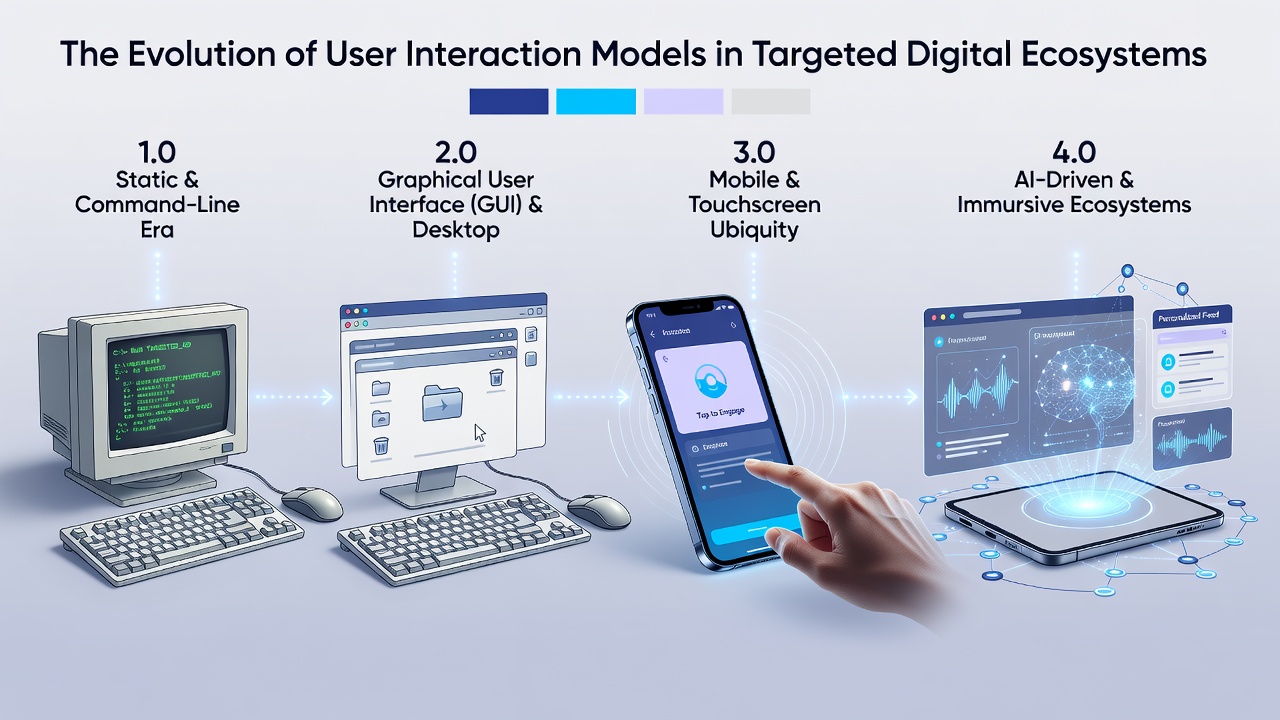
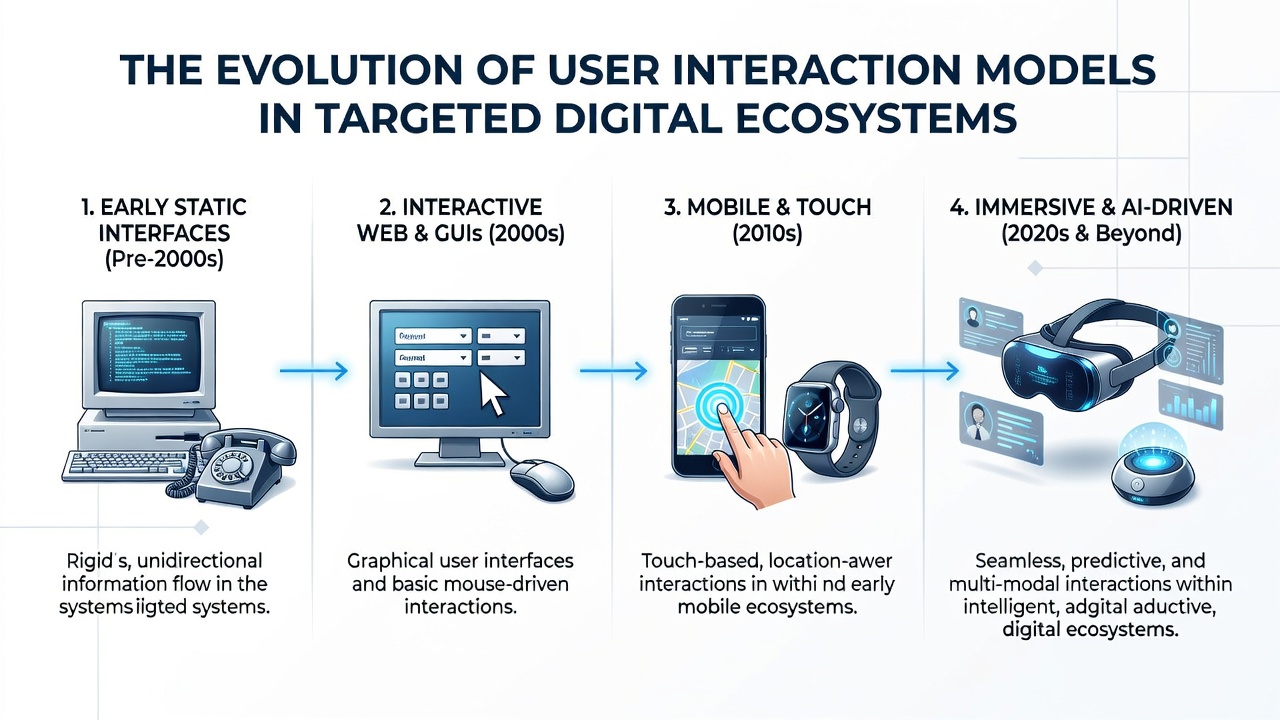
Targeted digital ecosystems have undergone substantial changes in how users engage with platforms since the early days of teh internet, and these shifts reflect broader advancements in technology along with increasing data availability. Early interaction models relied on basic forms and hyperlinks that delivered static content, yet as connectivity improved researchers documented a move toward dynamic elements such as JavaScript-driven updates and early personalization scripts that responded to user clicks in real time.
Foundations in Web 2.0 and Mobile Interfaces
During the Web 2.0 period platforms introduced user-generated content features including comment sections and social sharing buttons, and these elements encouraged repeated visits because they allowed direct participation rather than passive consumption. Mobile devices accelerated the transition when touch gestures replaced mouse inputs, and app stores created enclosed ecosystems where interactions stayed within branded environments that collected location data and usage patterns continuously. Studies from academic institutions in North America have tracked how push notifications and in-app gestures became standard because they maintained engagement without requiring users to reopen browsers each time.
Data-Driven Personalization and Algorithmic Targeting
Targeted ecosystems expanded once machine learning models began processing large datasets to predict preferences, and recommendation engines in streaming services or e-commerce sites adjusted displays based on past selections while A/B testing refined those predictions further. Observers note that this approach scaled efficiently across global user bases because centralized servers handled computations that individual devices could not manage alone. By 2025 regulatory filings in the European Union had begun requiring disclosures about how algorithms influence content visibility, and similar reporting standards emerged in Australia through competition authorities that monitor platform practices.
Voice assistants and chat interfaces added conversational layers on top of visual designs, allowing users to issue commands through natural language rather than navigating menus. These models integrated with existing recommendation systems so that spoken requests triggered tailored responses drawn from user histories, and adoption rates rose as hardware improvements reduced latency in processing spoken inputs. What's significant is that cross-device continuity became feasible when cloud synchronization kept session states consistent across phones, tablets, and smart speakers.
Emergence of Immersive and Predictive Models
Extended reality tools entered targeted ecosystems when augmented overlays appeared in shopping applications and navigation services, and users interacted through gestures or gaze tracking that supplemented traditional taps and swipes. Research indicates that these additions increased session durations in pilot programs because they reduced friction between discovery and action. In October 2026 several platform operators plan to release updated frameworks that incorporate on-device inference for faster predictions, reducing reliance on constant cloud queries while maintaining compliance with regional data protection rules.
Multi-modal inputs combined text, images, and biometric signals into single interaction streams, and platforms tested these combinations in controlled environments to measure accuracy improvements over single-channel methods. Government reports from Canada highlight how such integrations raise questions about consent mechanisms because users may not realize every sensor contributes to profile updates. Industry analyses from organizations like the OECD show that targeted ecosystems now prioritize retention metrics derived from interaction frequency, and those metrics guide iterative refinements to interface layouts.
Regulatory and Technical Pressures Shaping Future Directions
Policy developments across multiple regions have influenced how interaction models incorporate transparency features, such as explainable AI prompts that surface why certain recommendations appear. Platforms have adjusted designs to include toggles for personalization levels, and data portability requirements have prompted new export functions that let users transfer interaction histories between services. These adjustments occurred alongside technical progress in edge computing, which supports localized processing that limits data transfers while preserving responsiveness.
Case examples from financial technology ecosystems demonstrate how authentication flows evolved from passwords to behavioral biometrics that analyze typing rhythms and device handling patterns, and similar techniques have spread to content platforms seeking to verify genuine users without additional steps. Observers have recorded that these layered approaches maintain security while streamlining access, although implementation varies by jurisdiction based on local standards for data handling.
Conclusion
The progression of user interaction models within targeted digital ecosystems continues to follow patterns established by advances in computation, data collection, and regulatory oversight, with each stage building upon prior capabilities to create more responsive environments. Documentation from research bodies and government agencies shows consistent expansion in the types of inputs platforms accept and the granularity of outputs they deliver, and October 2026 stands as another checkpoint where new hardware and policy alignments will likely introduce further refinements. Those studying these systems can trace measurable shifts in engagement metrics and compliance practices that reflect both technological possibilities and external constraints.