
Riley Beck · 6 October 2026
Navigating Platform Adaptation Cycles in Specialized Digital Services
Specialized digital services operate within ecosystems where platforms undergo regular shifts in APIs, policies, and technical standards, and organizations must track these patterns to maintain service continuity. Data from industry reports shows that adaptation cycles often span 12 to 24 months, driven by updates from major providers in cloud computing, content delivery, and data analytics sectors. Researchers at institutions across the EU and North America have documented how these cycles affect sectors such as healthcare software, financial analytics tools, and logistics platforms, where even minor changes can disrupt integrations and compliance frameworks.
Understanding the Structure of Adaptation Cycles
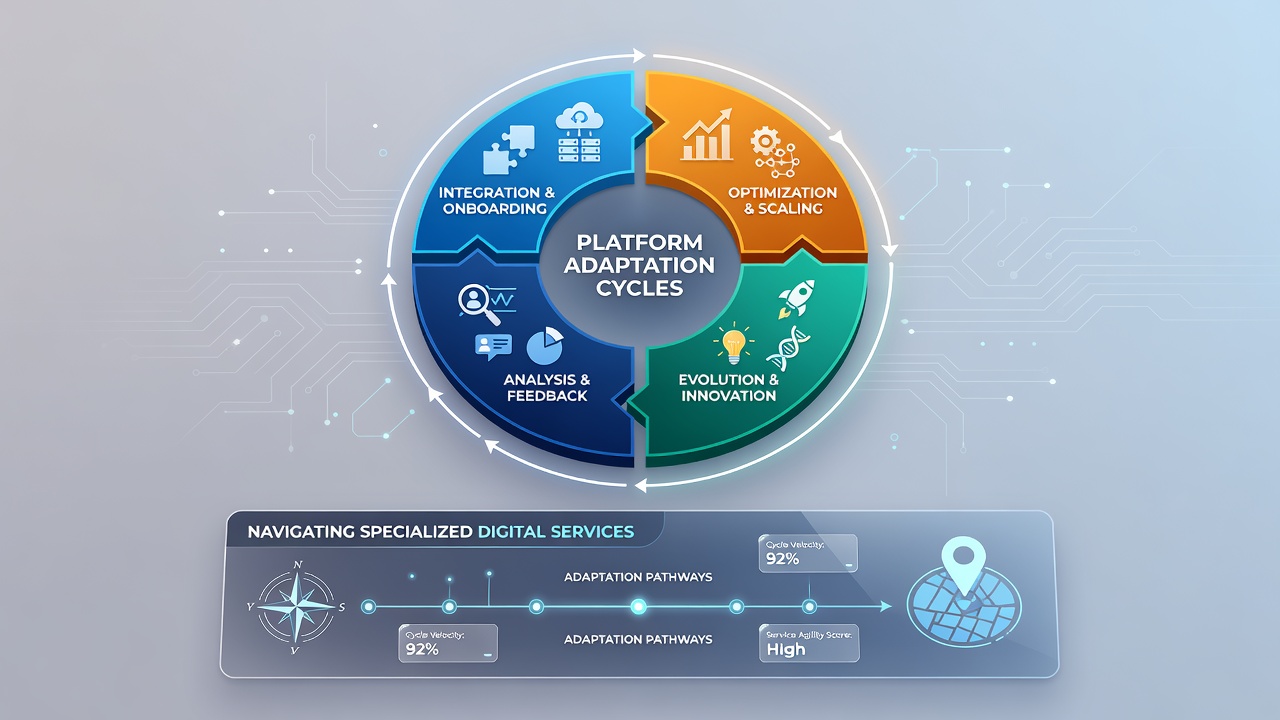
Platform adaptation cycles typically progress through phases of announcement, testing, rollout, and stabilization, while specialized service providers monitor signals from vendor roadmaps and regulatory filings. According to figures released by the European Commission in its 2025 digital markets assessment, over 60 percent of mid-sized digital service firms reported reallocating at least 15 percent of development resources during major platform transitions. Those who study these patterns note that early detection of upcoming changes allows teams to prototype adjustments before full implementation deadlines arrive, reducing downtime risks that have historically reached 8 to 12 hours per incident in affected systems.
October 2026 marks a notable window for several anticipated updates, including revised data portability requirements under evolving digital services legislation and scheduled API deprecations from leading cloud infrastructure providers. Observers tracking these timelines point out that services handling sensitive user data must prepare revised authentication protocols and encryption standards well in advance, since certification processes often extend three to six months beyond initial testing phases.
Key Factors Influencing Adaptation Success
Multiple elements shape how effectively organizations respond to platform changes, including access to technical documentation, availability of sandbox environments, and alignment with regional compliance standards. Studies conducted by research groups in Australia and Canada indicate that firms maintaining dedicated adaptation teams achieve faster integration times, with average reductions of 25 to 30 days compared to those handling updates through general staff. What's interesting is how resource distribution models shift during these periods, as teams prioritize monitoring tools and automated testing suites over new feature development.
Take one logistics platform operator that integrated real-time tracking APIs from a major provider; when the vendor announced endpoint modifications in early 2025, the operator used pre-built simulation environments to validate compatibility across its regional deployments. Similar approaches appear in financial analytics services, where data from academic papers published through university consortia highlights the value of maintaining parallel systems during transition windows to avoid service interruptions for end users.
Regional Variations in Platform Requirements
Requirements differ across jurisdictions, with the Australian Competition and Consumer Commission emphasizing transparency in data handling during platform migrations, while Canadian regulatory bodies focus on accessibility standards for updated digital interfaces. Research indicates that service providers operating across borders often establish centralized compliance hubs to track these variations simultaneously, since staggered rollout dates can create overlapping preparation demands. One study revealed that coordinated monitoring reduced duplicate testing efforts by approximately 40 percent in multi-region deployments.
But here's the thing: organizations that rely solely on automated alerts from platforms sometimes miss contextual nuances in policy updates, leading to additional manual reviews. Experts recommend combining vendor notifications with direct engagement through industry forums and regulatory consultation channels to capture full implications before implementation deadlines.
Tools and Approaches for Managing Transitions
Specialized services increasingly adopt modular architecture designs that isolate platform-dependent components, allowing targeted updates without widespread code revisions. Data shows that services employing these designs experience fewer cascading failures during adaptation periods, according to analyses from trade organizations representing software developers. Training programs focused on emerging platform standards also play a role, as teams equipped with updated skills complete migrations with lower error rates documented in post-implementation audits.
External resources such as reports from the European Commission digital strategy library provide detailed timelines and compliance checklists that many providers reference during planning stages. Another useful reference comes from academic repositories maintained by North American research networks, where case analyses of past adaptation cycles offer benchmarks for current efforts.
Conclusion
Platform adaptation cycles in specialized digital services follow predictable structures shaped by technical announcements, regulatory shifts, and vendor timelines, with organizations responding through structured monitoring and modular system designs. Evidence from multiple regions demonstrates that proactive preparation, including the use of simulation tools and cross-jurisdictional compliance tracking, correlates with reduced disruption during transition periods. As October 2026 approaches with its scheduled updates, service providers continue to refine these approaches based on accumulated data and documented outcomes from prior cycles.